

With attackers using richer data sets and advanced tools that make scams harder to distinguish from genuine transactions, traditional defenses are increasingly being outpaced.
To stay ahead of rising threats, you need to be up to date with the latest trends, proactive, tech-savvy, and ready to modernize your fraud prevention strategy.
In this article, we will cover the six key fraud prevention trends you need to know in 2026 and explain how they affect your security.
Key takeaways
- Fraud prevention is shifting from detection to prevention by design
The industry is moving away from reactive monitoring toward systems that stop fraud before it happens. This means real-time AI, intelligent workflows, and built-in controls that prevent risky actions instead of just flagging them after the fact.
- AI and real-time intelligence are now foundational, not optional
Machine learning, behavioral analytics, and real-time risk scoring are becoming the core infrastructure of fraud prevention. Static rules and delayed reviews cannot keep up with AI-powered scams, deepfakes, synthetic identities, and instant payments.
- Identity security is becoming frictionless but stronger
Passwords and basic MFA are being replaced by biometrics, passkeys, adaptive authentication, and smarter onboarding checks. The goal is high security with low customer friction by adding controls only when real risk is detected.
- Fraud defense is becoming collaborative and network-driven
Banks can no longer fight fraud in isolation. Shared intelligence networks, cross-institution data, and automated threat sharing allow fraud signals discovered at one institution to protect many others in real time.
- The winning strategy is unified, predictive prevention
Institutions that succeed will combine AI, identity, payments, UX design, intelligence sharing, and resilience into one connected system. Platforms like VALID deliver this by offering real-time AI decisioning, network-level fraud intelligence, and built-in prevention across every deposit channel.
6 Key fraud prevention trends in 2026
In 2026, fraud prevention is no longer just about detection. It’s about intelligent design, real-time intelligence, and building resilient systems that prevent fraud.
Below are the key trends that will shape the future of fraud prevention.
1. AI-powered fraud detection
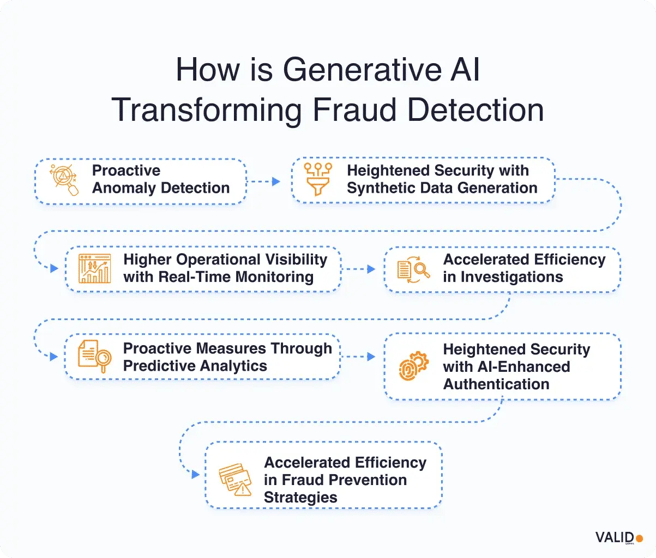
Financial institutions are increasingly turning to AI and machine learning to combat fraud more effectively. In fact, about 91% of financial institutions now use AI and machine learning to detect and prevent fraud in real time.
Advanced analytics now allow banks to monitor massive volumes of transactions and customer behavior in real time, identifying subtle patterns and anomalies that traditional rule-based systems often miss.
How to keep up with this trend:
- Invest in adaptive AI models: Use machine learning systems that continuously learn from new fraud patterns, rather than relying on static rules that quickly become outdated.
- Strengthen data integration: Connect transaction data, behavioral signals, device intelligence, and external threat feeds to provide AI models with a comprehensive, real-time risk picture.
- Blend AI with human oversight: Pair automated detection with fraud analysts who can validate edge cases, refine models, and prevent bias or blind spots.
- Adopt a risk-based customer journey: Apply stronger authentication only when risk is high, reducing friction for legitimate users while tightening controls on suspicious activity.
Pro tip:
VALID’s CheckDetect analyzes every deposited check in real time across mobile, ATM, and in-branch using AI risk scoring. It connects depositor behavior, payee history, and shared network data to detect fraud instantly, not days later.
What this means in practice:
- Instant fraud signals at the time of deposit
- Risk scoring that prioritizes the highest-risk cases first
- Controls aligned to your true risk tolerance
- Immediate hold communication to reduce customer frustration
- Consistent decisions across all deposit channels
- Real-time loss alerts instead of delayed detection
2. Stronger authentication and identity verification
To stay ahead of account takeover (ATO) attacks and synthetic identity fraud, financial institutions are strengthening both identity proofing and account access controls.
This means moving beyond passwords toward phishing-resistant authentication methods such as biometrics, passkeys, and physical security keys, supported by adaptive, risk-based login and transaction checks.
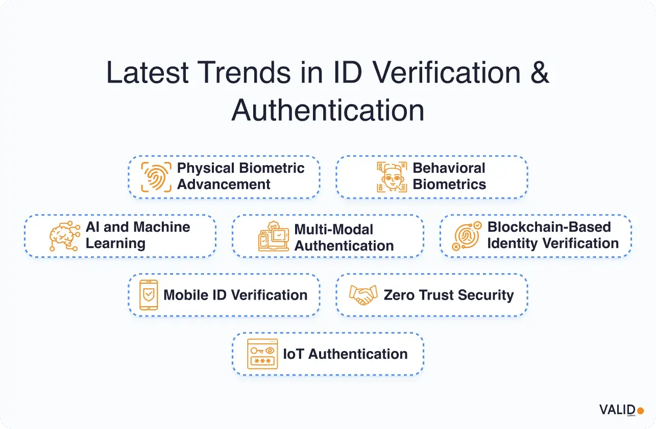
On the identity verification side, banks are combining document verification with liveness detection, device intelligence, and behavioral biometrics during onboarding to more accurately identify fake or synthetic identities.
How to keep up with this trend:
- Adopt phishing-resistant authentication: Implement FIDO2/passkeys, security keys, and biometric options to reduce reliance on passwords.
- Enforce adaptive MFA: Adjust authentication requirements based on real-time risk signals (e.g., device, location, behavior).
- Strengthen onboarding verification: Combine document checks, liveness detection, and device intelligence to block synthetic identities early.
- Track ATO and synthetic ID conversion points: Measure exactly where attacks succeed (onboarding, login, device change, payment, account recovery) and harden those steps first.
3. Collaborative fraud intelligence sharing
No financial institution fights fraud alone. By joining fraud-intelligence networks and industry consortia, banks can share confirmed fraud cases, emerging attack patterns, and high-risk indicators that would be invisible in isolated systems.
When one institution identifies a new synthetic identity profile, phishing template, or scam tactic, shared intelligence allows others to detect and block the same threat.
How to keep up with this trend:
- Automate threat information sharing: Feed confirmed fraud indicators (devices, IDs, IPs, domains, templates, mule accounts) directly into detection systems, eliminating reliance on manual alerts or reports.
- Standardize what gets shared: Define clear schemas for fraud signals (e.g., synthetic ID markers, phishing text patterns, device fingerprints) so data is immediately usable across institutions.
- Create rapid-response loops: Set up workflows where shared intelligence triggers instant rule updates, model tuning, or step-up controls.
- Map cross-sector dependencies: Actively integrate data from telcos, ISPs, platforms, and law enforcement feeds to disrupt scams at the infrastructure level, not just inside the bank.
Pro tip:
Turn shared intelligence into real-time, cross-institution protection. Edge connects transactional data across financial institutions into a single AI-powered fraud intelligence network. This way, threats detected at one institution become prevention signals for all, stopping fraud before it spreads.
What this means in practice:
- Fraud patterns identified at one bank protect every bank in the network.
- AI models learn from multi-institution data, not isolated datasets.
- Emerging scams are detected earlier through shared behavioral signals.
- Risk indicators spread instantly rather than via manual alerts.
- Fraud prevention improves across account opening, funding, lending, checks, and account access.
4. Fraud prevention by system and payment design
Instead of relying solely on identifying suspicious behavior, banks are embedding prevention directly into how money moves, how permissions are granted, and how high-risk actions are executed.
This approach treats fraud as a system design problem, not just a data or monitoring problem.
How to keep up with this trend:
- Reduce high-risk payment flows: Apply structural controls to irreversible and high-impact transactions (wires, instant payments, crypto, new beneficiaries, large transfers) using cooling-off periods, transaction delays, and multi-step verification.
- Engineer smart friction: Introduce friction only where risk is high, such as new payees, unusual amounts, device changes, or social engineering signals, while keeping low-risk journeys smooth.
- Adopt progressive trust models: Set account and transaction limits that expand over time based on verified behavior, tenure, and trust signals, rather than granting full privileges immediately.
- Embed scam interruption into UX: Use behavioral signals to trigger real-time warnings, confirmation flows, and “pressure detection” prompts that disrupt social engineering and coercion-based fraud.
- Design for compromise: Assume breaches and ATO will occur, and architect systems so damage is limited through transaction caps, segmented permissions, and containment mechanisms.
5. Layered and resilient fraud defense
There is no single solution that can stop every threat, so banks must combine prevention, detection, and response capabilities into a coordinated system.
This includes multiple controls working together, such as:
- Device intelligence
- Transaction monitoring
- Behavioral analytics
- Anomaly detection
- Step-up customer verification
How to keep up with this trend:
- Run live incident simulations: Regularly test teams with realistic scenarios (e.g., phishing campaigns, mobile banking breaches, mass ATO events) to ensure fast, coordinated response when real attacks occur.
- Design for failure, not perfection: Build response processes with the assumption that breaches will occur, with clear triggers for containment, customer protection, and recovery.
- Integrate fraud and resilience teams: Align fraud operations, cyber, risk, legal, and CX teams into a single incident command structure to enable faster responses.
- Measure resilience, not just losses: Track metrics like detection time, containment time, recovery speed, and customer impact.
6. Customer and employee education
Banks are shifting toward continuous fraud awareness programs as a core defense strategy, recognizing that human behavior is now as critical as cybersecurity tools.
Leading institutions embed scam education into everyday touchpoints (digital banking alerts, onboarding, branch interactions, and internal training), treating awareness as an ongoing service.
How to keep up with this trend:
- Digital-first fraud education: Integrate scam education into digital channels (apps, SMS, email, and portals) with real-time alerts and micro-learning tips.
- Simulation-based workforce training: Run recurring, scenario-based training for employees using real fraud examples and simulations.
- Always-on customer awareness: Launch continuous customer education campaigns (short videos, in-app prompts, workshops, webinars).
- Rapid threat intelligence deployment: Establish a fast-update process to push new scam intel as threats evolve (phishing, deepfakes, impersonation scams).
Fraud threat trends to keep an eye on in 2026
Fraud threats in 2026 are being shaped by the same technologies driving digital transformation (AI, automation, and real-time systems), but now in the hands of criminals.
The result is a new generation of fraud that is faster, more convincing, more scalable, and far harder to detect using traditional controls.
1. AI-powered fraud and deepfakes
The rise of AI and generative technologies has created a double-edged sword in fraud prevention.
While banks and financial institutions use AI to detect and stop fraud, criminals are using the same technology to launch scams that are more sophisticated, scalable, and convincing than ever before.
Fraudsters use generative AI to automate attacks, producing:
- Phishing emails
- Fake identities
- Malware
- Synthetic documents
At the same time, deepfake technology has introduced a new wave of hyper-realistic impersonation scams, making fraud harder to detect and more emotionally manipulative.
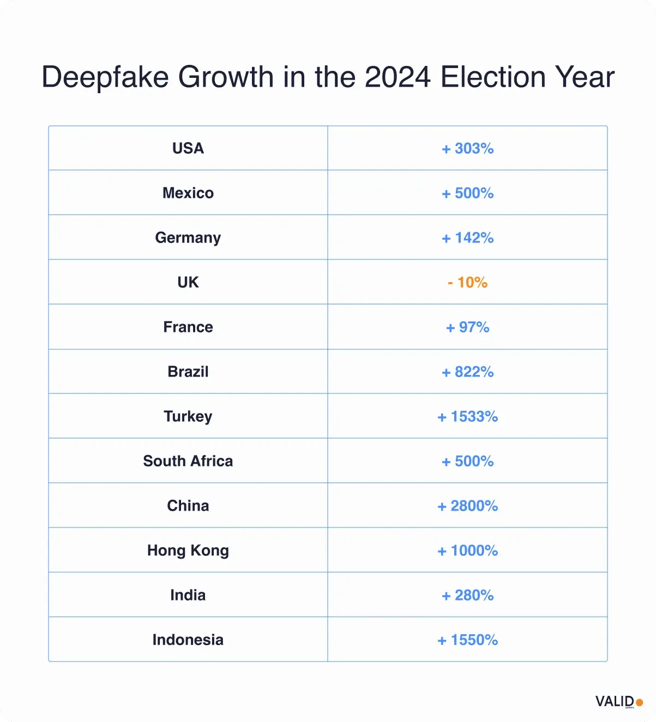
Global losses from deepfake-enabled fraud topped $200 million in just Q1 2025. In one case, criminals cloned a CEO’s voice to trick an employee into transferring $243,000 to a fraudulent account.
2. Synthetic identity fraud
Over the past year, synthetic IDs have become one of the most common types of fraud observed by financial risk teams.
In this scheme, fraudsters create fake personas by combining real data (such as stolen Social Security numbers) with fictitious details, effectively inventing identities that appear to be real customers.
Synthetic fraud is a “slow-burn” scam:
- Criminals open accounts
- Build trust over time
- Make small, normal transactions
- Pay bills on time
- Grow credit histories
- Appear like perfect customers
Then they execute a massive “bust-out”, draining credit lines, loans, and accounts in one coordinated hit.
The stats below show just how serious this threat is becoming:
|
Metric |
Statistic |
What It Means |
|
Annual US losses |
Massive financial impact is already happening today |
|
|
Projected losses |
Synthetic fraud is accelerating, not slowing down |
|
|
Share of new account fraud (some regions) |
Most new fraud accounts are synthetic identities |
|
|
First-party fraud linkage (2025) |
Synthetic identities are hiding behind “legitimate” fraud cases |
3. Account takeover (ATO) fraud
In this scheme, criminals gain unauthorized access to real customer accounts using stolen credentials, social engineering, and identity manipulation, then operate as the legitimate user.
Modern ATO is a human-first attack model where criminals:
- Steal credentials from breaches, phishing, and dark web markets
- Target consumers directly with personalized phishing
- Exploit call centers using social engineering and AI-generated voices
- Intercept one-time passcodes via malware and SIM swaps
- Bypass MFA by attacking people, not systems
The stats below show why ATO remains a top risk:
|
Metric |
Statistic |
|
Share of US adults affected |
|
|
Organizational exposure |
|
|
Attack growth rate |
250% spike in ATO incidents (2024) |
|
Financial impact (US) |
|
|
Credential abuse scale |
4. Real-time payments & real-time fraud
Real-time payments allow money to move instantly, but they also allow fraud to move instantly.
As banks adopt faster ACH, instant P2P transfers, and real-time settlement rails, criminals are exploiting the shrinking window for detection and recovery.
The FBI reported a major surge in fraud tied to real-time payment channels, driven by push-payment scams, business email compromise (BEC), and social engineering schemes.
Real-time fraud follows a simple pattern:
- Create urgency
- Remove verification
- Force speed
- Trigger payment
- Funds clear instantly
- Recovery becomes unlikely
Keep up with fraud prevention trends with the help of VALID
In a world of real-time payments, AI-powered crime, and instant fraud, prevention can’t be reactive. It has to be predictive, intelligent, and built into the system itself. That’s exactly where VALID stands apart.
With real-time ML decisioning, guaranteed risk coverage, cross-institution intelligence, and frictionless customer experiences, VALID doesn’t just help you detect fraud. It helps you prevent it, protect revenue, and build trust at scale.
Here are the key capabilities that make VALID different:
- Real-time AI risk decisioning across every deposit channel (mobile, ATM, in-branch, clearing)
- Guaranteed fraud protection that absorbs losses and protects institutional balance sheets
- Network-level intelligence through shared data and cross-institution fraud signals
- Frictionless customer experience that reduces holds, speeds access to funds, and increases trust
Contact us today to see how VALID Systems helps financial institutions fight fraud.