

Did you know that U.S. organizations lost over $12.5 billion to fraud in 2024, a 25% jump from the prior year?
Two of the most common threats behind this surge are securities fraud and wire fraud, which operate through different channels and carry distinct legal and operational risks.
In this article, we’ll dive deep into securities fraud vs wire fraud, explaining how each works, who they target, and what practical steps you can take to detect, prevent, and protect your organization from both.
What is securities fraud?
Securities fraud, also known as investment fraud, involves the misrepresentation or concealment of material information to influence investors’ financial decisions regarding securities. It is a deceptive practice within the stock, bond, or investment markets that causes investors to buy, sell, or hold assets based on false or misleading information.
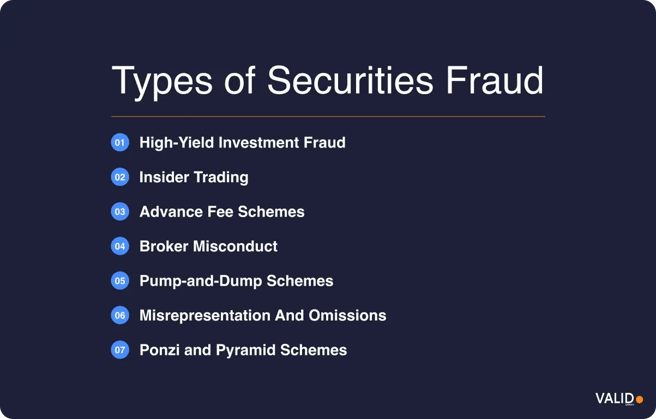
Globally, securities fraud encompasses a wide range of nonviolent financial crimes, including:
- Ponzi schemes
- Pyramid schemes
- Insider trading
- Market manipulation
Key characteristics of securities fraud
Common characteristics of securities fraud include:
- False or misleading information: Providing fake financial statements, inflating asset values, or making false promises of high returns. For instance, a company might exaggerate its earnings or conceal liabilities to drive up its stock price.
- Deceptive investment offers: Promoting fraudulent or unregistered investment opportunities that appear legitimate or “too good to be true.” Examples include Ponzi schemes (where returns to early investors are paid with funds from later investors), pyramid schemes, or fraudulent cryptocurrency token sales.
- Insider trading and market manipulation: Engaging in illegal trading based on non-public information or manipulating market prices. This can include “pump-and-dump” schemes, where individuals artificially inflate the value of a stock or crypto asset through false hype before selling it for a profit.
How securities fraud occurs
Securities fraud has evolved rapidly with advances in technology, social media, and artificial intelligence. Today, scammers operate on a global scale, using sophisticated digital tools and emotional manipulation to deceive investors.
Here are the most common ways securities fraud occurs:
1. Fraudulent investment products
Scammers design fake investment opportunities, such as bogus hedge funds, crypto ventures, or “guaranteed” high-yield programs, and present them as legitimate. They often use sleek websites, influencer endorsements, and targeted social media ads to create the illusion of credibility.
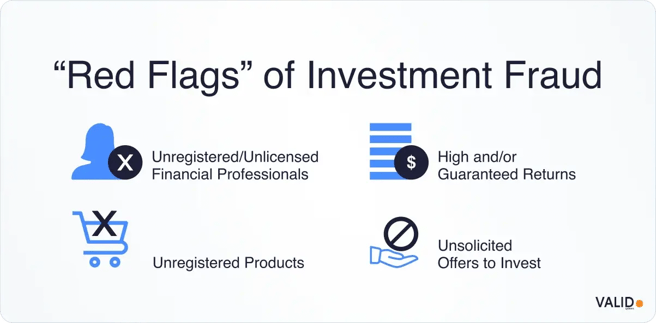
For example, the SEC charged the operators of “HyperFund,” a crypto-asset Ponzi scheme that allegedly raised over $1.7 billion by promising extraordinary weekly returns. The fraud was marketed globally through professional-looking online materials and promotional campaigns.
2. Insider and corporate fraud
Some securities fraud is committed by corporate insiders or executives who falsify company information to mislead investors. They may inflate financial results, misstate performance metrics, or conceal key risks to maintain valuations or attract acquisitions.
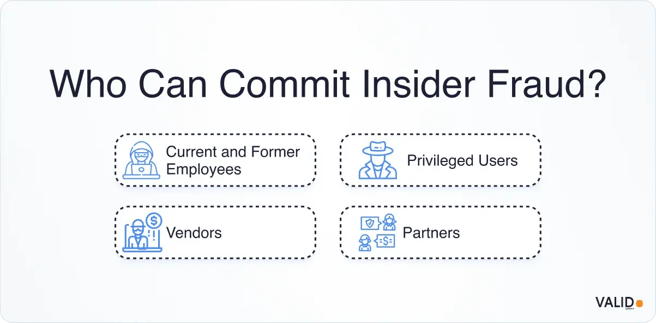
In 2025, startup CEO Charlie Javice was convicted of fraud for fabricating user data to induce JPMorgan Chase to acquire her education finance startup for $175 million. She hired a data scientist to create fake customer lists and falsely claimed over four million users, when only a few hundred thousand actually existed.
3. Market manipulation via social media and AI
Modern market manipulators exploit social media, chat forums, and AI-generated content to influence stock and crypto prices. Pump-and-dump schemes often appear on Reddit, Telegram, or X (formerly Twitter), where coordinated online activity drives artificial price spikes.
Between 2023 and 2025, regulators observed increasing use of AI to generate fake stock newsletters and deepfake videos showing CEOs delivering false company updates.
Regulatory agencies have raised alarms about “artificial intelligence and investment fraud,” warning that con artists may deploy AI to produce more believable promotional materials or even impersonate trustworthy sources.
How to prevent securities fraud
Preventing securities fraud is essential for protecting investors, maintaining market integrity, and upholding trust in the financial system. The following measures can help detect and stop fraudulent activity before it causes harm.
1. Strengthen corporate governance and ethics
Ethical leadership is the first line of defense against fraud. When boards and executives champion transparency and accountability, that culture permeates throughout the organization.
How to make it work
- Set a clear tone at the top that integrity outweighs short-term gains.
- Create safe, confidential channels for employees to report suspicious activity early.
- Reinforce ethical behavior through regular training and transparent performance reviews.
2. Ensure full regulatory compliance
Compliance is more than a box to check. It protects firms from costly violations and ensures fintechs and investment companies follow securities laws rigorously.
How to maintain compliance
- Adhere strictly to securities laws and exchange regulations (SEC, FCA, or local equivalents).
- Perform due diligence on all investment products and client recommendations.
- Maintain transparent disclosures and accurate records of communications and trades.
- Use automated compliance monitoring to flag irregularities in real time.
- Update policies regularly to reflect emerging risks and digital asset regulations.
3. Integrate fraud risk management and internal controls
Fraud prevention should be integrated within your enterprise risk framework, not alongside it. Regular assessments reveal weak points before they become entry points.
How to strengthen controls
- Conduct routine fraud risk assessments covering trading, payments, and investment activities.
- Segregate duties, as no single employee should have full authority over high-value transactions.
- Require dual authorization for significant trades, account openings, or valuation changes.
- Include securities fraud scenarios in internal audits and system testing.
- Validate new investor accounts and fund transfers through verified data sources.
4. Leverage real-time analytics and machine learning
In modern financial ecosystems, fraud can happen in milliseconds. That’s why detection must be just as fast.
How to leverage technology
- Deploy advanced, real-time analytics that evaluate transactions as they occur.
- Use machine learning to identify patterns across behavioral data, payee–payer relationships, and transaction histories.
- Apply natural language processing (NLP) to communications to flag high-risk phrases like “guaranteed returns.”
- Continuously train models on new fraud behaviors to adapt faster than the threats evolve.
Real-world examples of securities fraud
Below, we will explore two examples showing how securities fraud has impacted both traditional companies and the crypto market.
1. The Enron scandal
The Enron scandal of the early 2000s remains one of the most notorious cases of securities fraud in U.S. history.
Executives at Enron Corporation used complex accounting loopholes and special-purpose entities to conceal massive debt and inflate profits, creating the illusion of a thriving company. When the truth emerged in 2001, Enron’s stock plummeted from over $90 to less than $1, wiping out billions in investor wealth and forcing the energy giant into bankruptcy.
The fallout also led to the collapse of its auditor, Arthur Andersen, and the creation of the Sarbanes–Oxley Act of 2002, which strengthened corporate transparency and accountability.
2. Terraform Labs
A more recent example is the 2023 case against Terraform Labs and its CEO, Do Kwon, who were charged by the U.S. Securities and Exchange Commission (SEC) for orchestrating a multi-billion-dollar crypto fraud. The company falsely claimed that its algorithmic stablecoin, TerraUSD (UST), was reliably stable and backed by sound mechanisms.
In reality, its assurances about UST’s stability and the linked token LUNA were misleading. When the system collapsed in May 2022, it erased over $40 billion in market value and devastated investors worldwide.
What is wire fraud?
Wire fraud is a federal crime that involves using electronic communications, such as phone calls, emails, text messages, or online platforms, to carry out a scheme intended to defraud someone of money, property, or valuable information.
The name comes from the U.S. law that defines it (18 U.S.C. § 1343). Originally, the law covered fraud committed over telephone and telegraph wires, but today it applies to nearly all forms of electronic communication, including:
- Websites
- Messaging apps
- Fax
- Radio
Key characteristics of wire fraud
Common characteristics of wire fraud include:
- Use of electronic communications: Using email, text messages, phone calls, or messaging apps to carry out a fraudulent act. The communication itself serves as the tool to execute the scheme and typically crosses state or international lines.
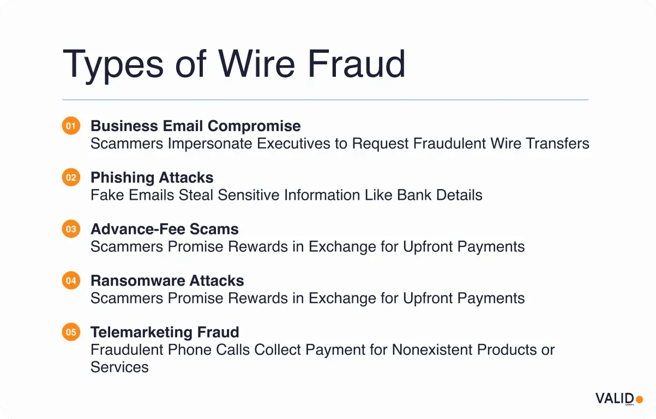
- Scheme to deceive for personal gain: Creating a deliberate plan to trick victims into sending money, revealing sensitive information, or giving up something of value. Common examples include business email compromise (BEC) scams, phishing attacks, fake online sales, tech support scams, and romance scams, all relying on digital communication to build trust or impersonate someone.
- Global and cross-industry reach: Wire fraud applies across industries and borders. Whether a hacker impersonates a CEO to request a wire transfer or a scammer texts a bank customer to move funds to a “safe account,” both fall under wire fraud.
How wire fraud occurs
Wire fraud can occur through any digital or electronic channel, making it one of the most versatile and widespread types of financial crime. In fact, a 2024 survey of U.S. companies found that 63% of businesses experienced at least one incident of wire-transfer fraud.
Below are some of the most common methods.
1. Business email compromise (BEC)
One of the most damaging forms of corporate wire fraud, BEC, involves criminals hacking or spoofing legitimate business email accounts to send fraudulent payment instructions.
For example, a scammer may infiltrate a vendor’s email system and send an invoice with “updated” bank details that actually belong to the fraudster.
.webp?width=493&height=243&name=Business%20Email%20Compromise%20(BEC).webp)
Others impersonate executives and pressure employees to urgently transfer funds for a confidential or time-sensitive project.
According to the FBI’s Internet Crime Complaint Center (IC3), BEC scams have been reported in all 50 U.S. states and 186 countries, with global losses now exceeding $55 billion.
2. Phishing, vishing, and smishing
These scams exploit digital communication channels to trick victims into revealing sensitive information or making payments. They are typically conducted in three different ways:
- Phishing involves deceptive emails.
- Vishing uses phone calls.
- Smishing relies on fraudulent text messages.
Criminals may pose as fraud department agents, urging victims to “secure” their funds by transferring them to a supposedly safe account controlled by the scammer.
The Federal Trade Commission (FTC) reports that impersonation scams were the most common consumer fraud category in 2023, costing victims billions of dollars.
3. Deepfakes and AI voice cloning
Fraudsters have begun using AI voice cloning and deepfake video calls to impersonate executives or trusted contacts, convincing employees to approve urgent fund transfers.
Law enforcement agencies, including Interpol and UK Finance, warn that AI tools are making fraud more “professional” and scalable, even for low-skilled criminals. Reports have surfaced of companies losing millions after brief but convincing deepfake phone calls from what appeared to be their CEOs.
How to prevent wire fraud
The strategies below can help financial institutions and businesses protect funds and preserve customer confidence.
1. Confirm payment details through trusted channels
Email and text requests for payments are common attack vectors. Always verify transfer instructions using a different, verified communication method before releasing funds.
How to apply it
- Confirm all wire requests via a phone call to a known number on file or through an internal directory.
- Require dual approval for large or unusual transfers.
- Use call-back procedures for first-time beneficiary payments.
- Avoid confirming transactions within the same channel that delivered the request.
- Follow FBI guidance by using secondary verification or two-factor authentication for any request to change payment information.
2. Enforce multi-factor authentication (MFA) and security measures
Compromised credentials are a leading cause of wire fraud and business email compromise (BEC). MFA and layered security controls significantly reduce these risks.
How to apply it
- Require MFA for all employees accessing email, payment systems, or remote networks.
- Enable MFA for customers using online or mobile banking.
- Use anti-phishing and domain protection tools to flag external or look-alike emails.
- Regularly update and patch systems to close vulnerabilities.
- Deploy web filters to block known malicious websites.
3. Train employees and conduct simulated drills
Human error is often the weakest link in wire fraud cases. Continuous awareness and testing help staff recognize and resist social engineering attempts.
How to apply it
- Provide ongoing training for employees who handle payments or customer funds.
- Run phishing simulations to test recognition of suspicious messages.
- Teach staff to look for red flags, such as urgent tone, secrecy requests, and domain misspellings.
4. Educate and warn customers
Empowered customers can help prevent fraud before it occurs. Inform them about common scams and what legitimate institutions will never ask them to do.
How to apply it
- Share scam alerts via online banking, email, SMS, and in-branch materials.
- Remind customers that banks will never request funds be transferred to a “safe account.”
- Add warning messages during online wire setup (e.g., “Were you asked to send this money by someone you met online?”).
- Emphasize that government agencies and legitimate companies do not demand wire or crypto payments.
5. Use real-time fraud monitoring and AI
Speed is critical in detecting and stopping fraudulent transfers. Advanced analytics can identify unusual patterns and block suspicious activity before funds are transferred.
How to apply it
- Implement monitoring systems that flag irregular behavior (e.g., large transfers to new accounts or activity outside normal hours).
- Use machine learning models to analyze transaction and behavioral data for risk scoring.
- Pause or delay high-risk transactions for manual review.
- Contact customers to confirm the legitimacy of flagged payments.
Real-world examples of wire fraud
The examples below highlight how wire fraud is evolving in both traditional corporate scams and modern AI-driven attacks.
1. Deepfake executive scam – Hong Kong, 2024
In early 2024, the Hong Kong branch of a multinational engineering and design firm lost approximately HK$200 million (about US$25 million) in one of the world’s most sophisticated AI-enabled wire frauds.
Criminals used deepfake video conferencing to impersonate senior executives of the firm, including the company’s CFO. During the fake virtual meeting, the scammers instructed a finance employee to transfer funds to several bank accounts for a supposed confidential transaction. The employee, believing the meeting participants were real colleagues, complied with the instructions.
2. Google and Facebook
Between 2013 and 2015, a Lithuanian hacker named Evaldas Rimasauskas defrauded Google and Facebook of over $100 million by posing as a vendor, Quanta Computer, a legitimate Asian hardware supplier. He sent fake invoices and contract documents that perfectly mimicked the real supplier’s style. The companies wired funds to bank accounts controlled by Rimasauskas in Latvia and Cyprus.
He was later arrested and extradited to the U.S., where he pleaded guilty to wire fraud, aggravated identity theft, and money laundering.
Securities fraud vs wire fraud: Key differences
To better illustrate the differences between these two types of fraud, the table below provides a side-by-side comparison across key aspects, including nature, execution, scale, and prevention.
|
Aspect |
Securities Fraud |
Wire Fraud |
|
Core Definition |
Involves deception in investments by falsifying or hiding information to mislead investors and manipulate financial markets |
Involves using electronic communication, such as phone, email, or the internet to deceive someone and obtain money or property |
|
Common Schemes |
Includes investment scams such as Ponzi or pyramid schemes, fake funds, fraudulent cryptocurrency offers, accounting fraud, and insider trading |
Includes phishing, business email compromise, romance and lottery scams, and hacking or spoofed wire transfers |
|
Victims and Targets |
Mainly, investors and financial markets, where victims expect returns based on investment activity |
Individuals, employees, or businesses that can be tricked into sending funds or revealing sensitive information |
|
Method of Execution |
Relies on false financial information or misleading investment opportunities that often unfold over time |
Relies on persuasive communication through calls or emails to make victims act quickly and transfer funds |
|
Scale of Impact |
Fewer but very large cases that can cause major financial losses and reduce trust in markets |
Very frequent incidents that together cause huge global losses each year |
|
Enforcement and Laws |
Enforced by agencies like the SEC and DOJ through civil or criminal actions with fines and long prison sentences |
Prosecuted mainly by law enforcement, such as the FBI, with penalties of up to 20 or 30 years in serious cases |
|
Prevention Focus |
Focus on transparency, accurate disclosures, strong compliance, and investor education |
Focus on security controls, transaction verification, and awareness training to prevent scams |
How VALID Systems helps prevent financial fraud
Securities fraud and wire fraud may operate on different rails, but both share a common weakness: delayed detection. When oversight lags behind attacker innovation, losses multiply fast.
That’s where VALID Systems closes the gap.
It is a fintech innovator specializing in real-time deposit and payment fraud prevention. Its patented technology helps banks identify, stop, and even guarantee coverage against financial losses before they occur.
Here’s what it does:
- Real-time risk intelligence for every transaction – VALID’s technologies bring instant decisioning and machine learning–driven fraud analytics to the point of transaction.
- CheckDetect delivers precise, real-time scoring for check deposits, identifying counterfeit or altered items before funds are released.
- Instant Funds gives customers immediate access to deposits while guaranteeing against loss, combining speed with safety.
- Edge, VALID’s fraud data consortium, extends protection even further. By analyzing behavioral signals across participating financial institutions, it helps detect emerging fraud rings, account takeovers, and first-party schemes before they impact portfolios.
- Behavioral analytics that adapt as fast as fraud does – Unlike static rule engines, VALID’s models learn continuously, evaluating payer and payee relationships, transaction context, and historical behavior to separate genuine activity from high-risk anomalies. This allows banks to minimize false positives, streamline fraud operations, and protect customers without friction.
- Operational insight that turns prevention into an advantage – VALID doesn’t just detect fraud, but also translates complex risk data into actionable intelligence. With severity scoring, customizable thresholds, and real-time reporting, institutions gain visibility across deposit, wire, and clearing channels, helping them respond faster and more strategically.
Book a free consultation with VALID Systems to see how real-time machine learning and guaranteed risk management can help you detect and prevent securities and wire fraud before losses occur!