
🟠Heather Hughes J.D., HCISPP , Vice President Client Engagement, Cypfer
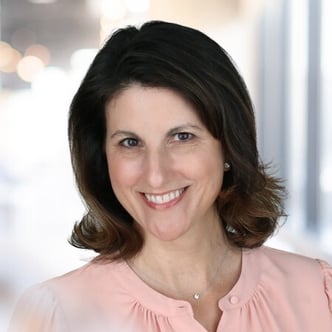
“It can happen to anyone.”
Heather calls herself a “hall monitor.” Not the annoying kind.
The kind who likes rules because rules keep people safe. That way of thinking shaped her whole career.
Heather did not start in fraud or cybersecurity. She started as a healthcare social worker. She cared about people and wanted to help protect them. To move into leadership, she went to law school at night.
Around that same time, HIPAA became law. Privacy suddenly mattered a lot more. Heather learned the rules. Then she learned what sat behind them — passwords, access, security, and what happens when private information gets out.
She spent years working in healthcare privacy. But one thing made the work very real. Patients she knew had their medical records stolen. These were not just files. They were personal details about their health and their lives. The patients were upset and scared.
That moment stayed with her. In 2017, Heather moved into cybersecurity. Today, she works in incident response. That means she gets the call after a cyber-attack has already happened. Systems are down. Leaders are stressed. Everyone wants answers.
Heather helps figure out how the attackers got in. She helps stop the damage and get businesses back up and running. She’s quick to point out that she doesn’t do it alone. “I might be the quarterback,” she said, “but the forensic engineers and investigators have the big brains.”
Heather knows when to lead and when to step back. She trusts experts and makes sure they are heard. That calm leadership matters when things feel out of control.
One thing Heather wants people to understand is this: It can happen to anyone.
She has seen cyber-attacks hit very small businesses and very large ones. Size does not matter. Industry does not matter. If attackers can shut a business down, even for a short time, they have power. Customers leave. Work stops. Money is lost.
That’s the risk.
Heather spends a lot of time talking to executive women because leaders are targeted more than ever. They have access to systems, money, and information. With AI and deepfake technology, attacks can look and sound real.
But Heather believes AI can also help. Used the right way, it can find problems faster and help stop attacks sooner. Still, her best advice is simple:
“Have a code word"
Have one with your family. Have one at work. If someone calls asking for money or urgent action, ask for the code word. No code word? No action. “It’s just two-factor authentication,” she said. “But with your voice.”
When asked why women do well in fraud and cybersecurity, Heather points to skills many women already have. Paying attention. Thinking ahead. Noticing when something feels off.
Those instincts matter here. Heather’s approach is steady and clear. Learn the rules. Prepare early. Listen to experts. Don’t panic. In a world where fraud moves fast, that kind of leadership makes all the difference.
🟠Lisa Frikker, MS, CFE, CAMS , Vice President Fraud Risk Management, Citi
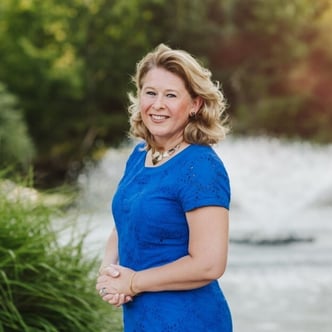
“You don’t outgrow mentorship; you just change roles.”
Lisa Frikker-Gruss — One Step at a Time
Over the last four months, I’ve had the chance to sit down with women across banking, fraud, and risk. Different roles. Different paths. But the stories often sound familiar.
Almost none of them planned to work in fraud. It found them. They talk about curiosity and attention to detail. Many of them loved Nancy Drew as kids. Over time, they’ve learned patience. They’ve learned that fraud isn’t just about stopping something bad — it’s about understanding who will be affected when you do.
Lisa Frikker-Gruss shares some of those traits. But her story stands apart.
Lisa has spent enough time in this work to see how decisions ripple outward. Her career didn’t rush forward. It widened — and with that came a deeper sense of care.
As a kid, Lisa loved mysteries. She read Nancy Drew. She watched Scooby-Doo. She was drawn to psychology and to understanding why people do what they do. That curiosity stayed with her as she got older, even before she knew there was a career that rewarded it.
After college, Lisa didn’t start in banking. She started in fashion.
Her first role was with a major retailer, working in corporate security. The job covered a lot — vendor issues, background checks, internal reviews. Fraud wasn’t the focus. Until one day, it was.
On the same day the company launched its e-commerce site, their first fraud case came in. Stolen credit card information. Merchandise shipped to the wrong address. The issue was fixed quickly, but the moment stayed with her.
“That’s where this is going,” she thought. From there, the work deepened.
Lisa became an internal fraud investigator, building cases from the ground up. Many involved employee theft — situations that didn’t always look dramatic from the outside but carried real weight.
She traveled to different locations, interviewed witnesses and suspects, and followed cases through to the end.
One case, in particular, changed how she saw the work.
What started as an embezzlement investigation uncovered something more personal. A woman had opened credit accounts in her own son’s name while he was away at college. When the debt grew, she stole from her employer to keep up. It wasn’t just fraud. It was family. It was harm layered on harm.
That moment stayed with Lisa. It also helped shape her next step.
She moved into banking, where the scale was larger and the responsibility heavier. Over time, her role shifted away from individual investigations and toward risk management. Instead of focusing on one case at a time, she began thinking about how fraud shows up across teams, products, and systems.
The work became quieter. The impact grew.
Lisa doesn’t see her career as a straight climb. She doesn’t like the idea of a ladder — something narrow, rigid, and rushed. Instead, she thinks of a career as a staircase.
“You’re still moving up,” she said. “But you’re allowed to move across.”
Over the years, she’s taken on different roles — investigator, team lead, manager, and individual contributor. Each step added something different. Perspective. Confidence. Strength. None of it felt wasted.
Now, working on a global team, Lisa sees fraud through many lenses. Laws differ. Expectations differ. Consequences differ. What works in one place may fail in another. Context matters.
What hasn’t changed is how personal the work feels to her.
Behind every decision is a person. Someone confused. Someone vulnerable. Someone who never expected to be here. That awareness guides how Lisa approaches her work today — carefully, thoughtfully, and with respect for the impact it carries.
When it comes to advice, Lisa keeps it simple.
Don’t rush. Don’t assume every move has to be upward. And don’t be afraid to take a step that teaches you something new.
Early in her career, mentors made a difference for her. Later on, she found that mentoring others taught her just as much. Watching someone grow — especially someone new to fraud — reinforced why the work matters.
“You don’t outgrow mentorship,” she said. “You just change roles.”
When asked to name this chapter of her life, Lisa chose one word: Global.
Not because of travel or titles, but because of perspective. Seeing fraud across cultures has changed how she thinks about risk, responsibility, and people.
Fraud may be technical. But the impact is human. And after years in this work, that’s the part Lisa holds closest.
One last thing...
After four months of interviews, I’ve learned two truths:
- Almost none of these women planned to work in fraud.
- A surprising number of them loved Nancy Drew.
Make of that what you will.
Thank you for reading, for sharing, and for helping this little passion project grow into something real. If these stories sound familiar, you’re probably in the right place.
If you know someone who deserves to be featured in a future edition, reach out to Laura Hollaway at lhollaway@validadvantage.com.
Together, we’ll keep celebrating the women who make the fraud industry stronger, smarter, and more connected than ever.