
Before we begin, I want to share where Women in Fraud is headed.
What started as a small passion project has grown into a community of people who care deeply about the work happening every day in fraud, risk, and payments. Each month, more of you are reading, sharing, and passing these stories along to colleagues and teams.
Our next goal is 2,000 subscribers — not for the number itself, but for what it means: more visibility for women whose work protects people, stops losses, and keeps systems running.
If these stories have resonated with you, I hope you’ll help us get there by sharing the newsletter or inviting others to subscribe. This community grows one recommendation at a time. Here's an easy cut-n-paste link for your socials or teams/slack channels:
Now, on to this month’s story...
🟠 Alicia Mahoney, Payment Services Strategist, First Tech Federal Credit Union
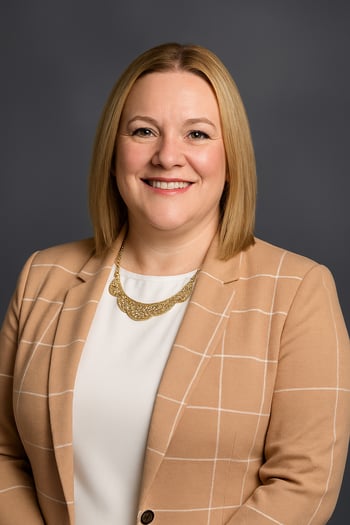
The hardest part of stopping fraud isn’t stopping the payment. It’s stopping the person.
Alicia works where those two things collide. Her role in payments strategy means helping money move quickly, without letting it move to the wrong place. She often sees fraud before alarms go off — and has to decide when speed matters and when it doesn’t.
Fraud usually looks normal at first. That’s why it’s so dangerous.
Seeing it early — and knowing when to act
Payments teams are often the first to notice when something is off. Alicia has spent years building teams that know what to look for and trust what they see — a printed name on the back of a mobile check, an address tied to a job scam, a large check that doesn’t make sense.
Some cases are strange. Most are quiet. All of them matter.
Strong tools help, and Alicia’s teams use them — consortium data, behavioral signals, layered controls. But tools don’t replace people. “You can hear it in someone’s voice,” she said. That human moment still matters.
Protecting people, not just accounts
Stopping losses for the institution is usually possible. Stopping losses for people is harder.
Romance scams, job scams, and money mules don’t feel like fraud while they’re happening. Many members don’t believe they’re being scammed — until the money is gone.
Sometimes the right move is friction. A delayed wire. A blocked transfer. Time to pause and think. Members aren’t always happy in the moment. Alicia understands that. A week later, many come back and say thank you.
That’s the part she carries with her. Fraud work isn’t just systems and rules — it’s care. It’s being willing to be uncomfortable now, so someone isn’t devastated later.
How she approaches the work — and why it matters
Alicia cares deeply about process. Clear workflows. Strong handoffs. Teams that work together instead of in silos.
She looks at broken systems and wants to make them better — not louder or more complicated, just better. That mindset has shaped her career and the teams she’s built.
She also believes fraud and payments work best when people are trained to see the whole picture. Knowing why something is risky matters as much as knowing that it is.
Why women thrive in this space
Alicia doesn’t overthink why so many women lead fraud and operations teams.
Fraud rewards people who notice details, process information quickly, and don’t ignore small problems. It rewards logistics, planning, and follow-through — skills many women use every day, both at work and at home.
Those instincts aren’t a weakness here. They’re the point.
Leaders who make growth possible
Alicia credits much of her growth to leaders who said yes — yes to training, yes to industry involvement, yes to finishing programs she started earlier in her career.
At her organization, development isn’t optional or vague. Clear paths exist for people who want to grow. Learn the systems. Understand the risk. Be ready when the next opportunity comes.
That kind of clarity builds confidence — and strong teams.
Advice she gives freely
You don’t need to be perfect to apply for the next role. If you’re close, raise your hand. Stretch. Put your name forward.
“Men do it all the time,” she said.
Technology helps. People still matter.
Alicia likes AI. She uses it. It helps surface risk faster and spot patterns earlier.
But when someone is being scammed, they don’t want a system. They want a person who listens and explains what comes next. Technology can flag fraud. People build trust.
That balance guides how Alicia works — and why she’s so effective.
The title she didn’t hesitate on
When asked what the title of her career would be, Alicia didn’t pause.
If it’s broken, I’ll fix it.
And then she gets to work — quietly protecting people who may never know how close they came.
🟠 Kasey Flanagan, Fraud Mitigation Manager, Northwest Federal Credit Union
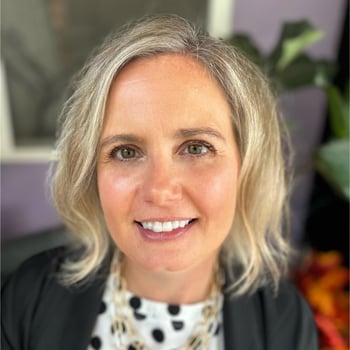
Some people discover fraud by accident. Kasey Flanagan did not.
She chose it.
Before cyber became headline news and before AI entered the mainstream, Kasey studied physical science and minored in criminalistics. She interned in a crime lab. She walked real scenes. She saw what evidence looks like before it becomes a case file.
Her first professional role was as a Special Agent with the Office of Inspector General at Health and Human Services. It was structured work. Procedural. Exacting. She was young — younger than most people expected to see in that seat.
At 22, she felt the quiet pressure to prove she belonged. There were days she worked through complex systems she was still mastering, reluctant to admit what she didn’t yet know. The lesson came later: expertise grows faster when questions are asked early.
What Authority Actually Means
Investigations have a lot to do with instinct and experience, but they need to be supported by evidence. From federal investigations to financial institutions, Kasey moved between intelligence work and fraud strategy before stepping into operational leadership.
The difference is significant. Strategy analyzes patterns. Operations owns outcomes.
In her current role, decisions are immediate. A wire transfer is pending. A customer insists it’s legitimate. The signals suggest otherwise. Sometimes the law allows you to stop it. Sometimes it doesn’t.
Regulatory protections vary. If a competent adult insists — and there is no legal basis to hold the funds — the money moves. Knowing something is wrong and watching it proceed anyway is one of the hardest realities in this field.
Especially when the victim is elderly. Especially when the influence comes from someone they trust. Fraud prevention is not unlimited authority. It is navigating legal, ethical, and operational boundaries in real time.
The Speed Shift
The tactics themselves are not new. Social engineering. Impersonation. Account takeover. What has changed is pace.
AI has compressed the timeline. Fraudsters iterate faster. Messaging is more convincing. Scale is broader. The public is less prepared than the technology being used against them.
Financial institutions cannot pivot casually. Systems are implemented thoughtfully, often intended to last years. Every decision must be sustainable.
That tension — external acceleration and internal structure — defines today’s fraud landscape. Detection matters. Prevention matters more. Stopping the loss before it leaves is the goal.
The Move to Management
For most of her career, Kasey worked behind the scenes — analyzing intelligence, building cases, mapping threats.
Leadership changed the vantage point. Now she is responsible not only for decisions, but for the people making them.
She recently asked her team how they would describe her leadership style. The words they chose: approachable. Adaptive. Responsive to what each person needs in the moment.
It is not loud leadership. It is calibrated leadership. Fraud work demands flexibility — in systems and in supervision.
If This Chapter Had a Title
After listening to her story, the title feels fitting: Within the Guardrails.
Because fraud prevention is not about sweeping authority. It is about understanding the limits — and making decisive calls anyway.
If you’ve read this far, congratulations — you officially care about fraud more than the average person.
Which probably means you’re in the right place. See you next month. :)
— Laura Hollaway
If you know someone who deserves to be featured in a future edition, reach out to Laura Hollaway at lhollaway@validadvantage.com.
Together, we’ll keep celebrating the women who make the fraud industry stronger, smarter, and more connected than ever.